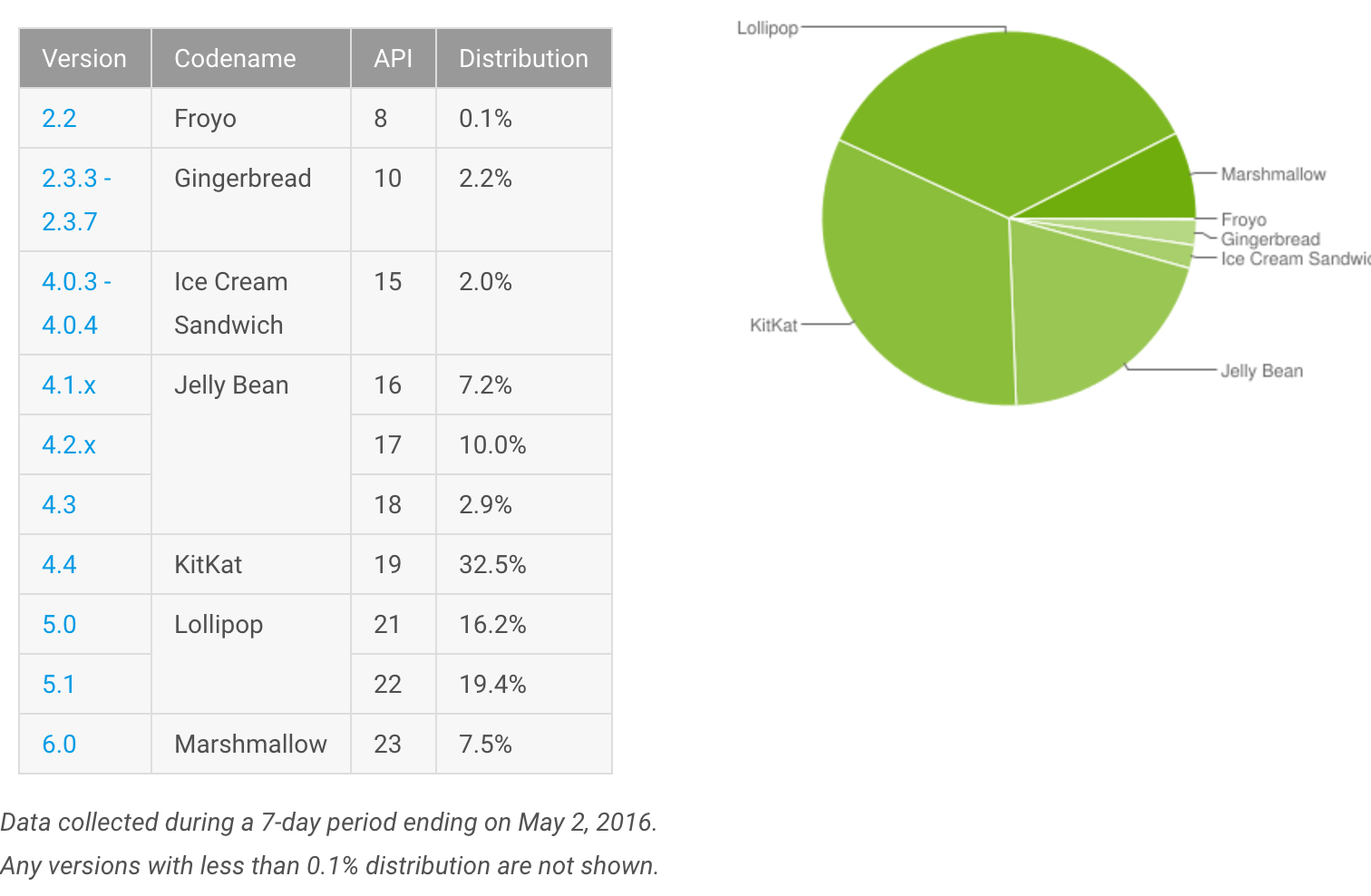
Written on May, 05, 2016
by ceo
Every year I like to take a snapshot of the Android platforms adoption. It is great to compare Year-to-Year numbers for historical purposes. Keeping track of platform adoption is important as it directly impacts what developers should be focusing on vs. what should…
Written on May, 06, 2015
by ceo
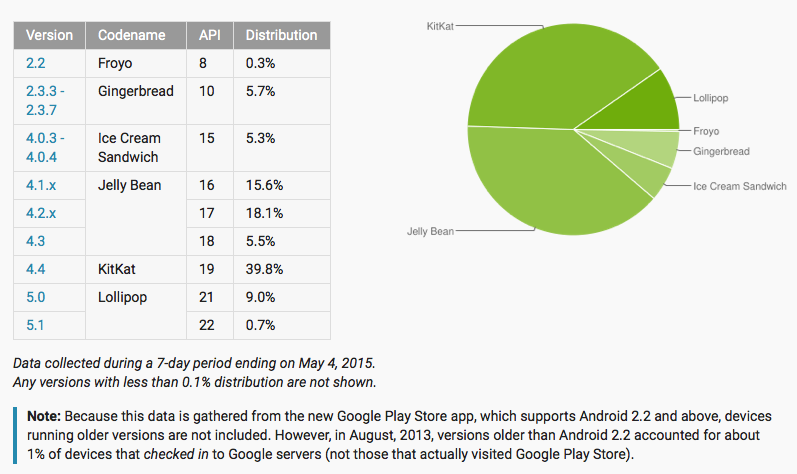
Every year I like to take a snapshot of Android platforms adoption for historical purposes. Below is the Android platform comparison 2015 vs. 2014. (Search my blog for previous ones). Keeping track of platform adoption is important as it directly impacts what developers…
Written on Apr, 18, 2015
by ceo
(Image Source: Mario Tomás Serrafero) I find this interesting: the recent move by MSFT to get into and “steal” the Android space. Today, thanks to new leadership at MSFT (Nadella), it seems the company is entering a new phase — with new vision…
Written on Apr, 18, 2014
by ceo
Due to its origins and philosophy with respect to openness, Android is a fragmented mobile platform. This is illustrated next: There are different kinds of fragmentation to keep in mind. Android platform versions. To minimize fragmentation-related headaches, decide early on what versions of…
Written on Apr, 02, 2014
by ceo
I wrote a small piece for the Safari Flow Blog: With sales of Android devices growing, there’s no better time to get started crafting your first Android app. Here are the five things you need to know before creating that first killer app.…
Written on Jan, 16, 2014
by ceo
My most recent piece is about Using Android’s Advertising ID (Safari Online Books blog). The ability to identify users is important for advertising, analytics and other purposes. Android developers typically rely on the Android Device ID or Telephony IDs such as the International…
Written on Dec, 23, 2013
by ceo
Installing apps, Android in this case, is at times a bit of WTF. It shouldn’t have to, but it is. The amount of personal information that some apps gather can be extreme. This concern is especially true after Google removed the very necessary…
Written on Dec, 16, 2013
by ceo
Android App Ops is no more… Two weeks after I wrote Android App Ops is a Step Forward, Google has disabled/removed the permission manager. After the Android 4.4.2 update, invoking the App Ops app results in a RuntimeException. The R.I.P. permission manager, a…
Written on Nov, 27, 2013
by ceo
Update Dec/15/2013: Two weeks after I wrote this piece below, Google removed App Ops… See Android App Ops *WAS* a Step Forward, and stay tuned. One of Android’s top limitations, one that totally drives me nuts, is its security model, in particular the…
Written on Nov, 12, 2013
by ceo
Check out the new guest post that I wrote on Enabling Voice Communication on Android Apps, for the Safari Books Online blog. It covers how to enable voice communication using the Android SIP Stack/API. Enabling voice communication on Android apps is possible via…